A common mistake contractors make in Rockhampton is assuming standard shallow foundations work across all river flats. The alluvial clays near the Fitzroy River can be soft and compressible. Without proper Improvement, settlement becomes a real problem. Deep Soil Mixing (DSM) design addresses this by creating stiff columns of treated soil. It improves bearing capacity and reduces total settlement. The technique works well for embankments, storage tanks, and road approaches. Before designing the DSM pattern, a thorough site investigation is essential. That includes a soil classification study to confirm clay type and moisture content. Getting that data right saves time and money later.
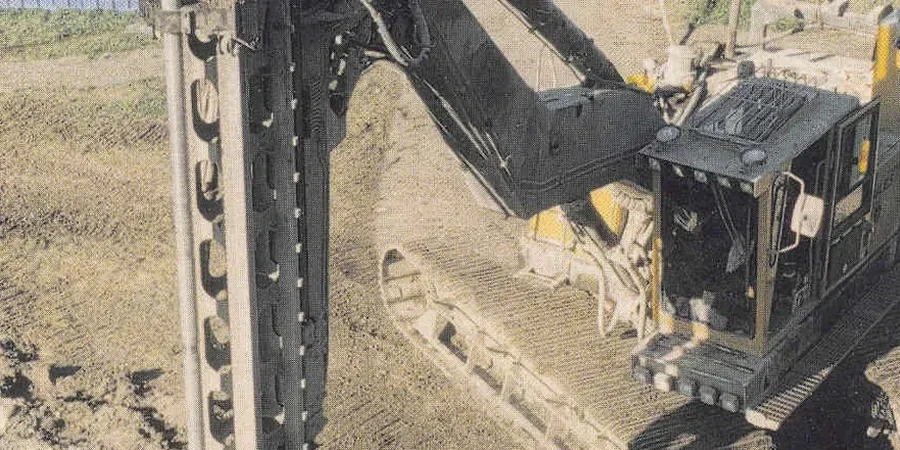
DSM columns in the Fitzroy alluvium can achieve 1.5 MPa after 28 days with a 12% cement content — verified by full-scale field trials.
Scope of work
Area-specific notes
AS 1726 requires that Improvement designs consider serviceability limits, not just ultimate capacity. In Rockhampton, the risk of differential settlement increases where the soft layer thickness varies rapidly. A DSM layout that works at one boring location may fail 10 meters away if the soil profile changes. Full-scale trial columns and load testing are mandatory to validate the design assumptions. The standard also demands documentation of the mixing energy per meter and binder delivery rate. Without these records, the design lacks traceability. An experienced geotechnical team will run at least one trial panel before production mixing begins.
Standards used
AS 1726-2017 Geotechnical Site Investigations, AS 4678-2002 Earth Retaining Structures, FHWA-HRT-13-046 Deep Mixing Design Manual
Linked services
DSM Mix Design & Field Trials
We develop the binder recipe in our NATA-accredited laboratory, then supervise full-scale trial columns on your site. The results define production mixing parameters and quality control criteria.
Verification Testing & QA/QC
After production columns are installed, we conduct core sampling, UCS testing, and column integrity logging. This confirms that the treated ground meets the specified strength and stiffness targets.
Typical parameters
FAQ
What soil conditions in Rockhampton require Deep Soil Mixing?
Soft alluvial clays and silts along the Fitzroy River floodplain, typically with undrained shear strength below 25 kPa and high moisture content. DSM improves these soils to support embankments, tank pads, and light structures without deep piling.
How much does Deep Soil Mixing design cost in Rockhampton?
The cost for a complete DSM design package, including laboratory mix design, trial column supervision, and verification testing, ranges between AU$2.860 and AU$8.930 depending on the number of columns and site access conditions.
What verification tests are required after DSM installation?
Core recovery and unconfined compressive strength (UCS) tests on extracted samples at 7, 14, and 28 days. Column integrity is verified using low-strain integrity testing or cross-hole sonic logging where specified.