A common mistake we see on Rockhampton projects is assuming a stable cut stays stable forever. Seasonal rainfall, subsurface drainage changes, and even minor vibrations from nearby blasting or heavy haulage can shift a slope from safe to critical without visible warning. Monthly geotechnical slope monitoring catches those changes early. Our team installs inclinometers and surface markers, then returns each month to take readings. We compare data against the initial baseline from the asentamiento diferencial assessment to flag deviations before they become failures. That regular cadence is what keeps rock and soil cuts in the Fitzroy River corridor safe through wet and dry cycles alike.
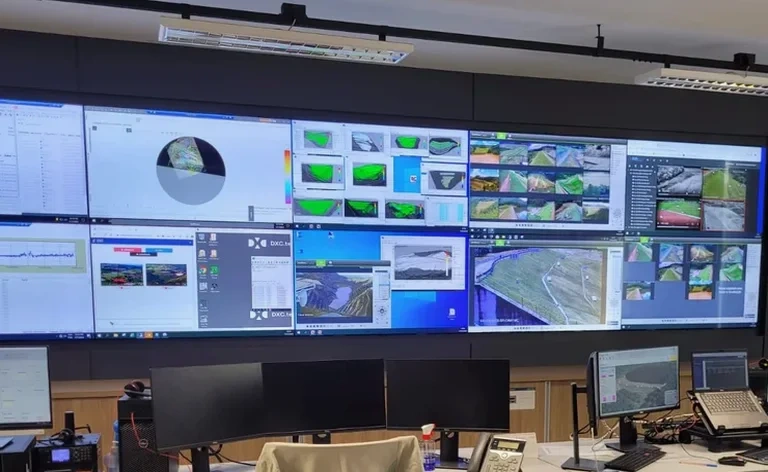
Monthly inclinometer surveys detect shear zone movement beyond 0.5 mm per month, well before surface cracking appears.
Scope of work
- Surface crack mapping and tape extensometer readings at fixed points
- Inclinometer surveys to detect shear zone movement beyond 0.5 mm per month
- Standpipe and vibrating-wire piezometer logging to track pore pressure changes after heavy rain
Area-specific notes
In Rockhampton we often see contractors wait until a tension crack appears at the crest before calling for monitoring. By that point the factor of safety has already dropped below 1.3 in many residual clay slopes. Monthly geotechnical slope monitoring provides a leading indicator. Our team checks inclinometer data and surface markers every cycle. When we spot accelerating displacement we correlate it with rainfall records from the Bureau of Meteorology station at Rockhampton Aero. That data-driven approach stops a small failure from turning into a multi-million-dollar road closure or structural repair. We have documented cases where early detection saved weeks of unplanned remediation.
Standards used
AS 4678:2002 Earth Retaining Structures, AS 1726:2017 Geotechnical Site Investigations, AS/NZS 1170.0:2002 Structural Design Actions (General Principles)
Linked services
Standard Monthly Slope Check
Covers up to 3 inclinometer casings, 10 surface markers, and 2 piezometers. Includes monthly data download, displacement plots, and a one-page risk summary. Suitable for low-to-moderate consequence cuts in residential or rural subdivisions.
Extended Monitoring with Real-Time Alerts
Adds vibrating-wire piezometers with automated dataloggers and SMS alerts. Includes 5 inclinometer casings, 20 surface markers, and a full trend analysis report every cycle. Recommended for high-consequence slopes near infrastructure like the Bruce Highway or rail corridors.
Typical parameters
FAQ
How long does the monthly monitoring contract typically run?
Most contracts run for 12 months to cover at least one full wet-dry cycle. The Rockhampton climate, with summer rainfall averaging 800 mm from December to March, makes year-round monitoring essential for capturing seasonal pore pressure peaks.
What triggers a warning in the monthly report?
We use a three-tier alert system. Green means movement below 0.5 mm per month. Amber flags rates between 0.5 and 2.0 mm. Red triggers an immediate site visit when displacement exceeds 2.0 mm in a single monitoring interval or shows accelerating trend.
Do you install the instruments, or do we need to subcontract that?
We handle the full installation. Our crew drills and grouts inclinometer casings to the specified depth, installs surface markers with stainless steel pins, and sets piezometers in sand-packed boreholes. Everything is tied into a local survey datum.
How much does monthly geotechnical slope monitoring cost?
The typical cost ranges between AU$570 and AU$2,110 per month depending on instrument count and site access. The lower end covers a basic check with 3 inclinometers and surface markers. The upper end includes real-time dataloggers and 5+ instruments.
Can we pause monitoring during the dry season?
We do not recommend it. Even in the dry months (May–October) residual clays in Rockhampton can undergo slow creep under constant load. Pausing leaves a blind spot. If budget constraints exist we can reduce frequency to bi-monthly, but monthly coverage gives the clearest trend.