The contrast between Rockhampton's alluvial flats along the Fitzroy River and the steeper residual soils on the Athelstane Range tells you everything about why expansive soil evaluation matters here. In the lower reaches near Depot Hill, dark cracking clays dominate — soils that swell dramatically when wet and shrink just as aggressively during dry spells. Up on the range, the profiles shift to deeper weathered rock with lower plasticity, but even those sites can surprise you. A proper evaluation using AS 1726 methods identifies the shrink-swell potential before slab design begins, and it pairs naturally with a subgrade assessment for road and pavement projects.
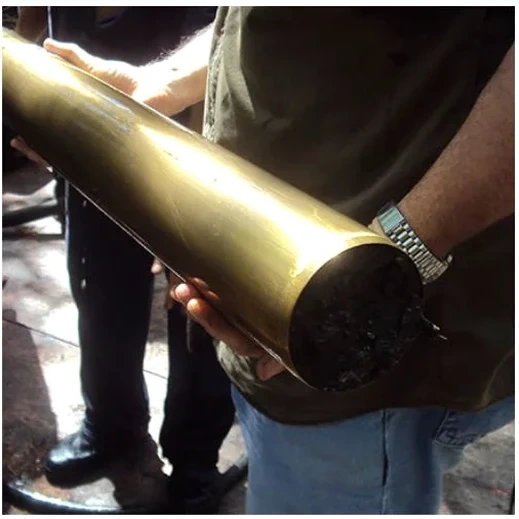
Seasonal moisture swings in Rockhampton can drive 80 mm of ground movement — identifying the site class early saves the entire foundation design.
Scope of work
- Atterberg limits testing per AS 1289.3.1 to classify plasticity
- Linear shrinkage and free swell index measurements
- X-ray diffraction for clay mineral identification when needed
Area-specific notes
Rockhampton's population sits around 80,000, but the urban footprint extends across some of the most reactive clay soils in Central Queensland. The 2017 flood event pushed groundwater levels high across the Fitzroy floodplain, triggering widespread slab distress in suburbs like Wandal and Norman Gardens. Without expansive soil evaluation, a standard stiffened raft on a class H site can crack within two wet-dry cycles. The risk isn't just residential — light industrial floors in Parkhurst and Gracemere have shown differential heave exceeding 60 mm where the evaluation was skipped. Identifying the reactivity class before construction allows the engineer to design for the actual movement potential rather than guessing.
Watch how it works
This service complements our laboratory testing work for a complete project analysis.
Standards used
AS 1289.3.1 — Atterberg limits determination, AS 1289.3.4.1 — Linear shrinkage test, AS 2870 — Residential slabs and footings (site classification)
Linked services
Shrink-swell classification testing
Full Atterberg limits, linear shrinkage, and free swell index on disturbed samples from test pits or boreholes. Results are mapped to AS 2870 site classes for foundation design input.
Clay mineralogy profiling
X-ray diffraction analysis to identify smectite, illite, or kaolinite dominance. Critical when standard index tests show borderline reactivity and the mineral composition decides the design approach.
Field moisture monitoring
Installation of neutron probes or time-domain reflectometry sensors to track seasonal moisture changes across the profile. Provides real data for heave prediction models and reactive foundation design.
Typical parameters
FAQ
How long does an expansive soil evaluation take in Rockhampton?
A standard evaluation — sampling, Atterberg limits, and linear shrinkage — takes 7 to 10 business days from sample delivery. If X-ray diffraction is needed, add another 5 to 7 days. Rush turnaround can be arranged for urgent pre-construction deadlines.
What is the difference between site class M and H for reactive soils?
Site class M indicates moderate reactivity with characteristic surface movement (ys) between 20 and 40 mm. Site class H covers high reactivity with ys from 40 to 60 mm. The classification comes directly from the plasticity index and linear shrinkage results. Class H requires deeper footings or stiffened raft designs to accommodate the larger movement.
How much does expansive soil evaluation cost in Rockhampton?
The typical range for a residential evaluation is AU$1,040 to AU$2,380, depending on the number of test pits, laboratory tests required, and whether clay mineralogy analysis is needed. Commercial or large-lot evaluations may run higher due to additional sampling points.