With over 80,000 residents and a subtropical climate that brings over 1,100 mm of rainfall annually, Rockhampton sits on a mix of alluvial clays and residual soils derived from the Fitzroy River floodplain. Construction here demands accurate soil strength data — not assumptions. Our triaxial test evaluates the shear strength and stress-strain behavior of cohesive samples under controlled drainage conditions. This data directly informs foundation design for commercial buildings, road embankments, and retaining structures across the region. Before planning deep foundations, we often recommend combining the triaxial test with a resistivity survey to map subsurface variability across larger sites.
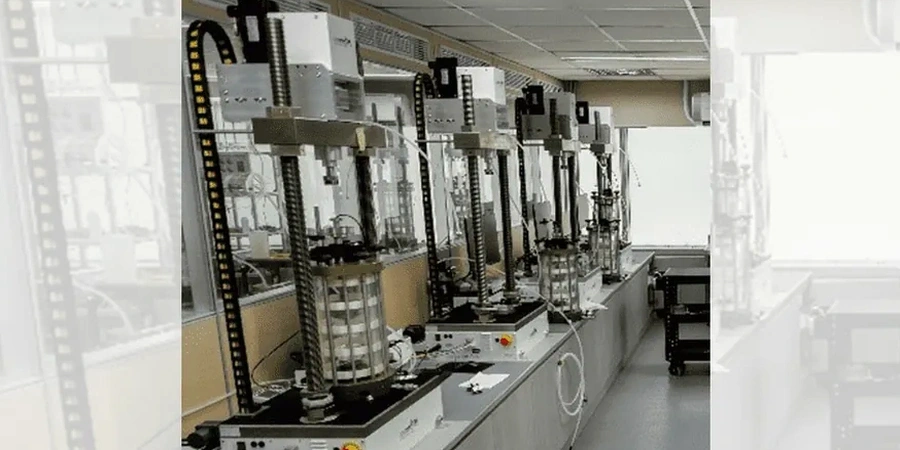
The triaxial test provides effective stress parameters that are essential for safe foundation design in Rockhampton's variable alluvial clays and residual soils.
Scope of work
Area-specific notes
In Rockhampton, we often see projects where designers assume uniform soil conditions across a site, only to find stiff clay lenses over soft compressible layers during excavation. Without triaxial test data, engineers may overestimate shear strength, leading to undersized footings or excessive settlement after construction. The risk is higher near the Fitzroy River where alluvial deposits alternate between sand and clay in thin layers. A single set of triaxial results from representative samples — combined with careful SPT profiles — catches these weak zones before they become structural problems. Ignoring this step can cost more than the test itself.
Standards used
AS 1289.6.4.1 – Determination of shear strength by triaxial compression, AS 1726 – Geotechnical site investigations, AS 1289.6.4.2 – Consolidated undrained triaxial test on cohesive soils
Linked services
Unconsolidated Undrained (UU) Triaxial
Fast test for immediate shear strength of saturated clays. No drainage allowed during shearing. Ideal for embankment stability checks and rapid loading conditions.
Consolidated Undrained (CU) Triaxial with Pore Pressure
Measures effective stress parameters (c’ and φ’) under controlled drainage. Used for deep foundation design and slope stability analysis in Rockhampton's clay profiles.
Multi-Stage Triaxial Testing
Multiple confining pressures on a single specimen. Saves sample material and time for projects requiring strength envelopes at different depths.
This service complements our laboratory testing work for a complete project analysis.
Typical parameters
Watch how it works
FAQ
What is the difference between UU and CU triaxial tests?
UU (unconsolidated undrained) measures total shear strength without allowing pore pressure dissipation — suitable for short-term stability. CU (consolidated undrained) consolidates the sample before shearing and records pore pressure, giving effective stress parameters for long-term design. Both are performed under AS 1289.6.4.1.
How much does a triaxial test cost in Rockhampton?
A standard UU triaxial test on a 50 mm sample typically ranges between AU$3,260 and AU$4,770 depending on the number of confining stages and sample preparation required. CU tests with pore pressure measurement fall at the higher end. Contact us for a quote based on your specific project scope.
How many samples do I need for a reliable triaxial test result?
For a single strength envelope, we recommend at least three specimens tested at different confining pressures. In variable soils like Rockhampton's alluvial clays, five or more specimens from different boreholes give a more representative profile. The engineer can then apply statistical methods to define design parameters.
Can triaxial testing detect swelling or collapse potential?
The standard triaxial test does not directly measure swelling or collapse. Those require specific oedometer or swell-consolidation tests. However, the triaxial test does reveal strain-softening behavior and pore pressure response that can indicate collapsible structure in unsaturated soils, especially in residual profiles found on Rockhampton's higher ground.