Rockhampton sits on the alluvial plains of the Fitzroy River, where the soil profile transitions from sandy loams near the city centre to stiff clays and gravels toward the Berserker Range. The Fitzroy floodplain deposits contain a wide range of particle sizes, from coarse gravels to fine silts. A full grain size analysis using both sieve and hydrometer methods is essential to classify these materials correctly under AS 1726. Without this data, engineers risk misinterpreting drainage behaviour and compaction targets. The hydrometer phase becomes particularly important for the fine fraction, which can exceed 30% in the lower terraces. For projects involving road embankments or residential slabs, the particle size distribution directly informs the selection of compaction equipment and the need for a subgrade evaluation before placing fill.
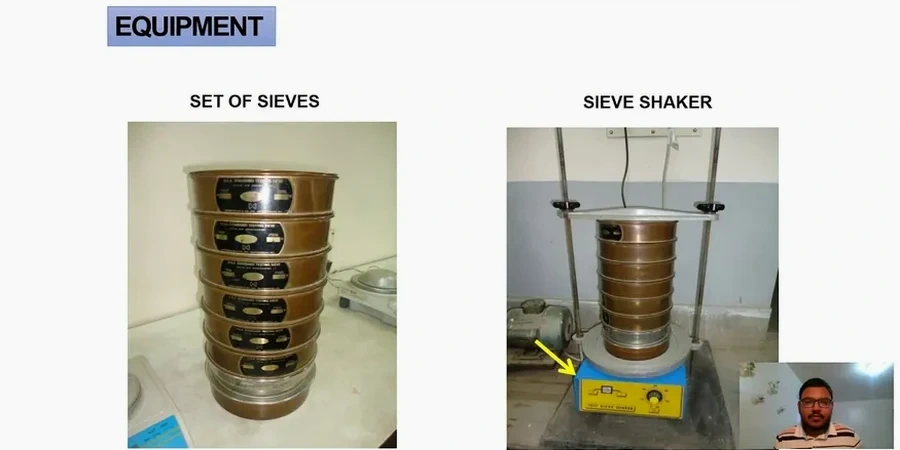
The hydrometer phase reveals whether fine-grained soils in Rockhampton are active clays or inert silts, a distinction that governs slope stability and pavement performance.
Scope of work
Area-specific notes
In Rockhampton, one issue we see repeatedly is the misclassification of clayey sands as clean sands based on sieve data alone. The hydrometer stage catches this. Without it, engineers might assume free-draining conditions and design subgrades with inadequate drainage. That leads to pavement failure within two wet seasons. Another common problem is sampling from the wrong depth interval. The Fitzroy alluvium can change from sand to clay within 0.5 m vertically. A grain size analysis on a poorly chosen sample gives a false picture. We always recommend pairing the analysis with a field inspection pit to verify layer continuity before committing to design parameters.
Standards used
AS 1289.3.6.1 – Soil classification tests: Determination of the particle size distribution of a soil (sieve analysis), AS 1289.3.6.3 – Determination of the particle size distribution of a soil (hydrometer analysis), AS 1289.3.6.1 – Standard Test Method for Particle-Size Analysis of Soils
Linked services
Standard Sieve Analysis (AS 1289.3.6.1)
Full dry and wet sieving from 75 mm down to 75 microns. Suitable for gravels, sands, and low-plasticity silts. Results include cumulative percent passing curves and USCS group symbols.
Combined Sieve + Hydrometer (AS 1289.3.6.3)
For soils with significant fines content. Hydrometer analysis quantifies clay and silt fractions, enabling accurate classification of CH, CL, MH, and ML groups. Essential for Rockhampton's floodplain clays.
Particle Size Distribution (PSD) for Earthworks
Rapid turnaround PSD for borrow pit evaluation, road subgrade assessment, and filter design. Includes gap-grading detection and uniformity coefficient (Cu) and curvature coefficient (Cc) calculation.
This service complements our laboratory testing work for a complete project analysis.
Typical parameters
FAQ
Why is the hydrometer test necessary for Rockhampton soils?
Many soils in Rockhampton contain a significant fine fraction that passes the 75 micron sieve. The hydrometer test separates clay from silt by measuring sedimentation rates. Without it, a clay-rich soil could be misclassified as low-plasticity silt, leading to incorrect compaction and drainage assumptions.
What sample size is required for a full grain size analysis?
For combined sieve and hydrometer testing, we need approximately 2 kg of disturbed sample from a representative depth. This ensures enough material for the coarse sieve stack and the 50 g hydrometer subsample. The sample should be sealed in a plastic bag to preserve moisture content.
How long does a grain size analysis take in Rockhampton?
Standard turnaround is 5 to 7 working days for a combined sieve and hydrometer test. The hydrometer phase requires readings over a 24-hour period, so results are typically available by day 6. Rush orders can be completed in 3 working days for an additional fee.
What is the typical cost for grain size analysis in Rockhampton?
The price for a combined sieve and hydrometer analysis ranges from AU$180 to AU$300 per sample. The variation depends on whether the sample requires full wet sieving, multiple hydrometer readings, or re-testing for quality assurance. Volume discounts apply for batches of 10 or more samples.