Ground improvement in Rockhampton represents a critical branch of geotechnical engineering focused on enhancing the physical and mechanical properties of soil and rock masses to support safe and durable construction. This category encompasses a range of advanced techniques designed to increase bearing capacity, reduce settlement, mitigate liquefaction potential, and control groundwater flow. In a region where infrastructure must contend with challenging subsurface conditions, the strategic application of improvement methods is not merely an option but a fundamental requirement for project viability. From residential subdivisions to major transport corridors, the ability to modify ground behaviour underpins the long-term performance of the built environment.
Rockhampton's geological setting presents a complex tapestry of alluvial deposits, estuarine sediments, and weathered rock profiles that directly influence the selection of appropriate improvement technologies. The city straddles the Fitzroy River floodplain, where thick sequences of soft, compressible clays and loose silty sands are commonplace. These materials often exhibit low strength, high moisture content, and significant potential for consolidation settlement under load. Additionally, the presence of reactive soils in some areas introduces shrink-swell hazards that can damage lightly loaded structures. Understanding this local geology is the first step in diagnosing ground-related risks and designing effective remediation strategies, whether through mechanical compaction, hydraulic modification, or the introduction of cementitious binders.
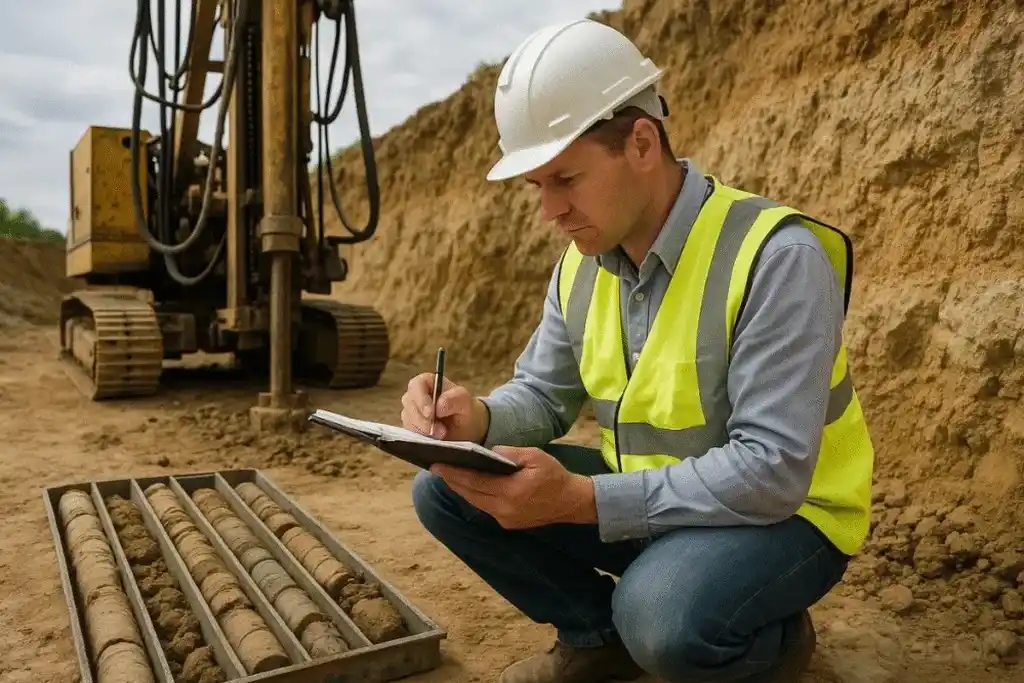
The regulatory framework governing ground improvement in Australia is robust, with Australian Standards such as AS 3798 (Guidelines on earthworks for commercial and residential developments) and AS 4678 (Earth-retaining structures) providing essential performance criteria. In Queensland, the Department of Transport and Main Roads (TMR) specifications, particularly those relating to earthworks and geotechnical investigations, apply to all public infrastructure projects. These documents mandate rigorous site investigation, design verification, and quality control testing to ensure that improved ground meets specified strength and serviceability limits. Compliance with these standards is non-negotiable, and practitioners must demonstrate that methods like deep soil mixing or dynamic compaction design achieve the required engineering properties while managing environmental impacts such as groundwater protection.
The types of projects that demand ground improvement in Rockhampton are diverse and span both the public and private sectors. Infrastructure developments, including highway embankments, bridge approaches, and railway corridors, frequently encounter soft ground that necessitates treatments like prefabricated vertical drain installation to accelerate consolidation. Commercial and industrial facilities, such as warehouses and processing plants, often rely on preloading with surcharge design to reduce post-construction settlement. In the urban realm, residential subdivisions built on marginal land may require grouting design to stabilise foundations or control subsurface erosion. Each project presents a unique combination of loading conditions, soil profiles, and performance timelines, demanding a tailored improvement approach.
Available services
Unsaturated soil analysis
→ Ver detalleDynamic compaction design
→ Ver detalleDeep Soil Mixing (DSM) design
→ Ver detallePrefabricated vertical drain (PVD) design
→ Ver detalleGrouting design
→ Ver detalleJet grouting design
→ Ver detallePreloading design (without surcharge)
→ Ver detallePreloading with surcharge design
→ Ver detalleGeogrid specification
→ Ver detalleGeomembrane specification
→ Ver detalleGeotextile specification
→ Ver detalleLime and cement stabilization
→ Ver detalleGeotechnical instrumentation (design and installation)
→ Ver detalleOrganic soil management
→ Ver detalleContaminated soil remediation
→ Ver detalleCommon questions
What are the key factors that determine which ground improvement method is suitable for a site in Rockhampton?
Method selection depends primarily on the soil profile, particularly the thickness and strength of soft clays or loose sands, groundwater conditions, and the required improvement depth. The load type and allowable settlement for the proposed structure are critical, as is the construction schedule. Local expertise with alluvial Fitzroy River deposits often favours techniques that address both consolidation and strength, such as preloading combined with vertical drains or deep mixing.
How do local regulations influence ground improvement projects in Queensland?
Queensland regulations, including AS 3798 and TMR specifications, mandate comprehensive geotechnical investigations before design. They require performance-based verification, meaning the improved ground must be tested to confirm it meets specified strength and settlement criteria. Quality control during construction, such as monitoring pore water pressures during preloading or verifying column integrity in deep mixing, is legally required to demonstrate compliance and ensure long-term stability.
What is the typical time frame for ground improvement works to be completed before construction can begin?
Time frames vary significantly by method. Dynamic compaction or jet grouting can be completed in weeks, whereas preloading with surcharge, with or without prefabricated vertical drains, typically requires months to allow for primary consolidation of soft clays. The design phase must include a detailed consolidation analysis to predict settlement rates under surcharge loads, ensuring the construction programme accommodates this critical waiting period.
Can ground improvement techniques address both bearing capacity failure and excessive settlement risks simultaneously?
Yes, many techniques are specifically designed to tackle both issues. Deep soil mixing creates stiff, load-bearing columns within a soft matrix, increasing composite strength while reducing total and differential settlement. Similarly, dynamic compaction densifies loose granular soils, improving bearing capacity and reducing future settlement under load. A comprehensive ground investigation is essential to quantify both failure mechanisms and design an integrated improvement strategy.