A multi-story commercial development along Rockhampton's Fitzroy River floodplain recently required a detailed stability assessment before foundation design could proceed. The underlying alluvial deposits, with interbedded clay and sand layers, present variable shear strength that demands site-specific factor of safety (FS) calculation. Without this analysis, the risk of bearing capacity failure or excessive settlement increases significantly. Our team integrates field data from test pits and boreholes with laboratory triaxial results to deliver FS values that meet AS 4678 and AS 1726 requirements. For slopes adjacent to the river, we also incorporate stability of slopes analysis to evaluate long-term performance under saturated conditions. This approach ensures that every FS recommendation reflects real ground conditions rather than conservative estimates alone.
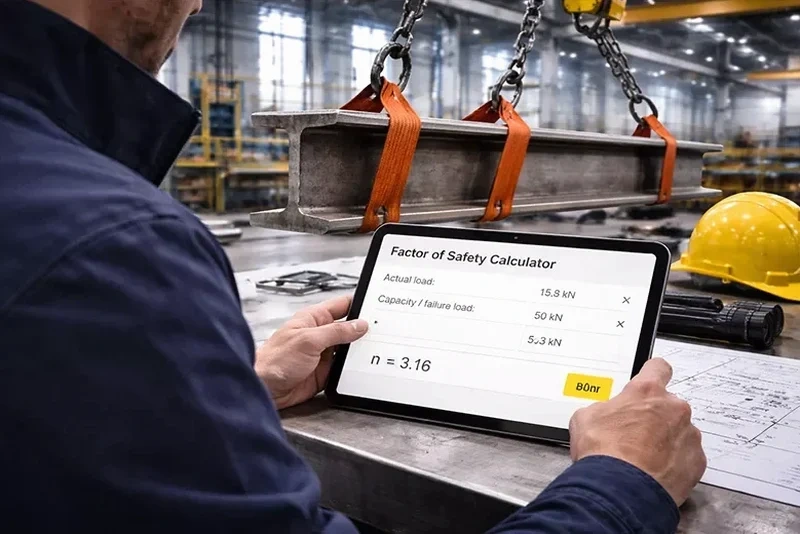
Bishop's simplified method combined with site-specific triaxial data provides FS values that reflect real ground behaviour in Rockhampton's alluvial soils.
Scope of work
Area-specific notes
A common error made by local contractors in Rockhampton is assuming a uniform soil profile across a site based on a single test pit. The Fitzroy River alluvium can change from stiff clay to loose sand within a few metres horizontally, meaning a global factor of safety calculated from one boring may be dangerously misleading. We have seen designs where FS was overestimated by 0.3 or more because perched water tables were not accounted for during dry-season testing. To avoid this, we recommend monitoring excavations during construction to verify assumptions about groundwater and strength. A factor of safety below 1.5 on any critical surface should trigger immediate redesign rather than acceptance based on average values.
Standards used
AS 4678:2002 Earth-retaining structures, AS 1726:2017 Geotechnical site investigations, AS/NZS 1170.0:2002 Structural design actions
Linked services
Slope Stability Analysis
Limit equilibrium and finite element analysis for natural slopes, cut batters, and embankments. We model seepage, surcharge, and seismic loads per AS 4678 to compute FS for short and long-term conditions.
Retaining Wall FS Verification
Verification of overturning, sliding, and bearing capacity factors for cantilever, gravity, and anchored walls. Includes soil-structure interaction and drainage evaluation.
Foundation Bearing Capacity Assessment
Calculation of FS against bearing failure for shallow and deep foundations using Terzaghi's and Meyerhof's methods, calibrated to Rockhampton's soil parameters from SPT and triaxial data.
Typical parameters
Watch how it works
FAQ
What is the typical factor of safety required for slopes in Rockhampton?
For permanent slopes under static conditions, AS 4678 recommends a minimum FS of 1.5. For temporary excavations, 1.3 is acceptable provided groundwater is controlled. In seismic zones along the Fitzroy River, we often apply 1.1 to 1.2 under earthquake loading per AS/NZS 1170.
How much does a factor of safety calculation cost in Rockhampton?
The cost for a professional FS calculation in Rockhampton typically ranges between AU$1,010 and AU$2,390, depending on the number of failure surfaces analysed, the complexity of the soil profile, and whether field testing is required. A detailed quote is provided after site review.
Which soil parameters most affect the factor of safety in Rockhampton?
In Rockhampton's alluvial soils, cohesion and friction angle from triaxial testing are the most influential parameters. Pore pressure ratio also significantly reduces FS during wet season conditions. Using default values without site-specific testing can overestimate FS by 20% or more.
Can you calculate FS for existing slopes or retaining walls?
Yes, we back-calculate the factor of safety for existing structures using current geometry, observed distress, and sampled soil properties. This is common for litigation support or when assessing the need for remedial works on older walls along Rockhampton's road network.