Slope engineering in Rockhampton encompasses the analysis, design, and stabilization of natural and constructed embankments to ensure long-term geotechnical performance and public safety. This category covers a comprehensive range of operations from initial slope stability analysis through to permanent structural solutions like retaining wall design. The region's subtropical climate, with intense seasonal rainfall and occasional cyclonic events, creates dynamic loading conditions that demand rigorous assessment of pore water pressure fluctuations and transient seepage forces. Understanding local geological variability is fundamental to developing resilient slope management strategies that protect both infrastructure and communities across the Fitzroy Basin.
The geology of Rockhampton presents distinctive challenges for slope engineering, characterised by deeply weathered Permian sediments, residual basaltic soils on volcanic plugs like Mount Archer, and expansive clay formations along the Fitzroy River floodplain. These materials exhibit significant strength reduction when saturated, with local Mandalay Formation clays prone to slaking and dispersion. Hillside developments on the Berserker Range encounter colluvial deposits overlying weathered mudstone and sandstone sequences, where relic jointing and bedding planes create preferential failure surfaces. The city's topography, ranging from flat alluvial plains to steep escarpments exceeding 40 degrees, means that even minor excavations can intersect unfavourable geological structures requiring detailed slope failure analysis to identify failure mechanisms before they propagate.
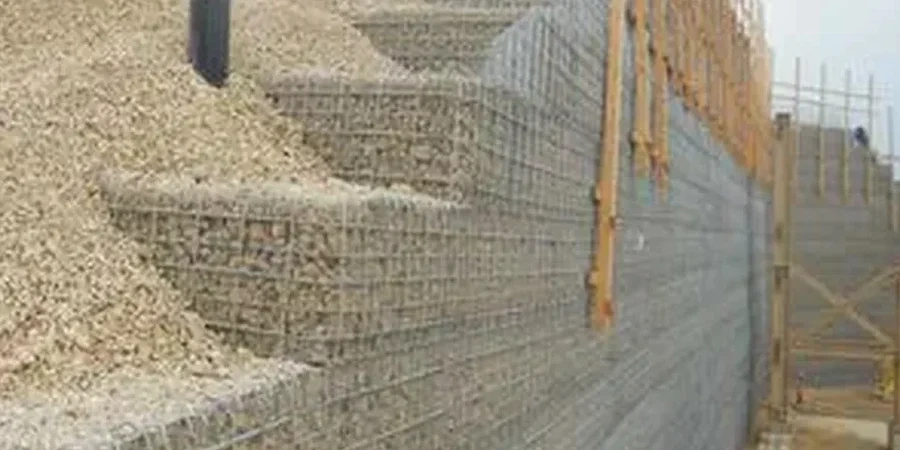
Australian standards govern all slope engineering works in Rockhampton, with AS 4678-2002 (Earth-retaining structures) providing the primary framework for design and construction. This standard mandates limit state design approaches, minimum factor of safety values of 1.5 for global stability under static conditions, and specific requirements for drainage systems and reinforcement durability. Rockhampton Regional Council's Planning Scheme overlays additional requirements for hillside construction, including mandatory geotechnical investigations for slopes steeper than 15 degrees and restrictions on cut and fill operations that alter natural drainage patterns. The Queensland Department of Transport and Main Roads supplements these with Technical Specification MRTS06 for road embankments, which specifies compaction criteria and reinforcement standards critical for infrastructure projects along the Capricorn Highway and Bruce Highway corridors.
Projects requiring slope engineering expertise span multiple sectors across the Rockhampton region. Residential subdivisions on the city's expanding northern fringe near Norman Gardens and Mount Archer demand slope stabilization design to render steep blocks buildable while managing overland flow paths. Infrastructure projects such as the Yeppen South floodplain upgrade and Rockhampton Ring Road alignment involve major earthworks where MSE wall design provides cost-effective alternatives to conventional concrete structures. Commercial developments along the Fitzroy River frontage frequently require assessment of riverbank stability and scour protection, while mining-related infrastructure in the broader Capricorn region calls for robust solutions on rehabilitated slopes. Each project type demands tailored approaches that account for the scale of earthworks, consequence of failure, and long-term maintenance realities in a regional centre with variable contractor capability.
Available services
Slope stability analysis
→ Ver detalleSlope failure analysis
→ Ver detalleFactor of safety (FS) calculation
→ Ver detalleGeocell design
→ Ver detalleSlope stabilization design
→ Ver detalleRetaining wall design
→ Ver detalleMSE (Mechanically Stabilized Earth) wall design
→ Ver detalleDiaphragm wall design
→ Ver detalleLandslide assessment
→ Ver detalleGeotechnical slope monitoring (monthly)
→ Ver detalleCommon questions
What are the most common triggers of slope instability in Rockhampton?
The primary triggers are prolonged or intense rainfall events that saturate soils, reducing effective stress and shear strength. Excavation at the toe of slopes during construction, uncontrolled vegetation removal altering evapotranspiration, and leaking stormwater or sewer infrastructure are also significant contributors. The region's expansive clays undergo cyclic shrinkage and swelling, progressively weakening the soil structure and creating preferential pathways for water infiltration during wet seasons.
When is a geotechnical investigation mandatory for slopes in Rockhampton?
Rockhampton Regional Council requires a geotechnical investigation for any development on land with slopes exceeding 15 degrees, for cut and fill operations greater than one metre in height, and for any works within 10 metres of a waterway. The investigation must characterise subsurface conditions, assess groundwater regimes, and carry out stability analyses demonstrating adequate factors of safety under both static and seismic loading conditions.
What is the difference between a retaining wall and slope stabilisation?
Slope stabilisation modifies the existing ground through regrading, drainage, and reinforcement to create a self-supporting mass, while retaining walls are structural elements that resist lateral earth pressures from a retained soil mass. Stabilisation often uses techniques like soil nailing or geocell reinforcement to improve the in-situ material, whereas walls create a distinct structural interface between cut and fill zones or between differing ground levels.
How does the factor of safety concept apply to slope design in Australia?
The factor of safety is the ratio of resisting forces to driving forces along a potential failure surface. AS 4678-2002 specifies minimum values of 1.5 for global stability under static conditions, increasing to 1.3 for seismic cases. These values carry out a margin against uncertainties in soil parameters, pore pressure assumptions, and construction variability. Higher factors are adopted where failure consequences are severe or ground conditions are highly variable.