A common mistake we see among contractors in Rockhampton is assuming a cut slope will stand up just because the soil looks stiff when dry. The region's alluvial terraces along the Fitzroy River hide clay layers that can lose strength rapidly once exposed to rain or groundwater seepage. Without a proper slope stability analysis, a seemingly stable batter can fail within a single wet season, taking the haul road or building pad with it. We assess both short-term undrained conditions and long-term drained strength using limit equilibrium and finite element methods, factoring in the perched water tables that develop after summer storms. Before any excavation deeper than 1.5 metres, we recommend coupling this with a shoring system design to confirm the excavation support works with the natural ground.
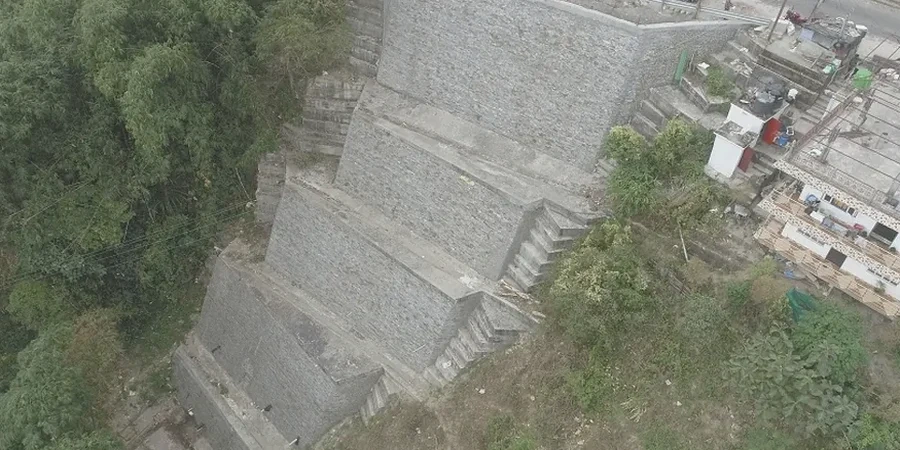
In Rockhampton, a slope that stands dry in July can fail in February when the Fitzroy aquifer rises. Our analysis accounts for that seasonal swing.
Scope of work
Area-specific notes
In Rockhampton, many times we see that the top two metres of residual soil sit on a slickensided clay layer left by ancient river meanders. If the slope stability analysis ignores that interface, the slip surface can daylight unexpectedly at mid-slope, causing a sudden rotational failure. We always check for relict shear surfaces during the site walkover and include them in the model as weak seams. The risk is highest on the western side of the city where the terrain rises toward the Berserker Range, because the colluvium there is loose and prone to raveling. A proper analysis reduces the chance of a slope collapse that could bury equipment or block access roads.
Standards used
AS 4678-2002 (Earth Retaining Structures), AS 1726-2017 (Geotechnical Site Investigations), AS/NZS 1170.4-2007 (Structural Design Actions – Earthquake), FHWA-NHI-05-089 (Mechanically Stabilized Earth Walls)
Linked services
Limit Equilibrium Analysis
We run circular and non-circular failure surface searches using Bishop, Janbu, and Spencer methods. Output includes factor of safety for each trial surface and a critical slip surface plot. Suitable for cut slopes, embankments, and open pits up to 15 m high.
Finite Element Slope Modelling
For complex geometries or soil-structure interaction, we use 2D and 3D finite element models that simulate staged construction, pore pressure dissipation, and reinforcement loads. This approach captures progressive failure and localised yielding.
Stability of Reinforced Slopes
When the factor of safety is below the design target, we design soil nail walls, anchored systems, or geosynthetic reinforced slopes. We include corrosion protection for steel elements per AS 4678 and check external stability against sliding and overturning.
Typical parameters
FAQ
What does a slope stability analysis cost in Rockhampton?
For a typical residential or small commercial site, the analysis component (field data review, modelling, reporting) ranges between AU$2.090 and AU$3.500. For larger projects with multiple cross-sections and reinforcement design, the cost can reach AU$6.450. The final price depends on the number of sections, depth of investigation, and whether reinforcement design is required.
How long does the analysis take?
A standard analysis for one or two cross-sections takes 5 to 10 working days after the borehole logs and lab results are ready. If the site has complex geology or requires sensitivity analysis for transient groundwater, we usually need 12 to 15 days.
Do you include groundwater monitoring in the analysis?
Yes, we do. For Rockhampton sites we always install at least one standpipe piezometer during the investigation and monitor it for a minimum of four weeks to capture the seasonal high water table. The measured heads are then used as boundary conditions in the slope model.