Many contractors in Rockhampton assume the local black soil can support a standard pavement without treatment. That assumption leads to cracking, rutting, and premature resurfacing within two years. The reactive clays of the Fitzroy floodplain change volume dramatically with moisture. Without proper road subgrade design, you are gambling with public infrastructure budgets. A targeted geotechnical investigation reveals the actual bearing capacity and swell potential before any material is placed. We combine field sampling with laboratory compaction tests to define the design CBR. This step eliminates guesswork and prevents costly rework later. For deeper profiles or variable fill layers, we often recommend a dilatometer test to obtain stiffness parameters in situ.
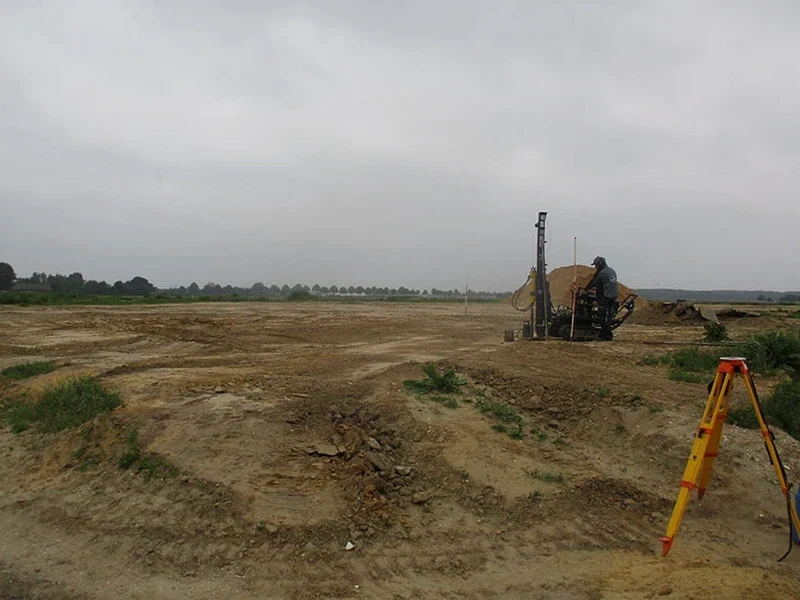
Reactive clays in Rockhampton's floodplain can swell up to 15% with moisture, directly undermining pavement integrity if subgrade design ignores volume change.
Scope of work
Area-specific notes
Rockhampton sits on Quaternary alluvium and Tertiary basalts, with groundwater typically 2–4 metres below surface in the city centre. The reactive clay layer can exceed 6 metres in thickness. If you compact a pavement subgrade without addressing this swell potential, the resulting heave lifts the pavement surface unevenly. Water infiltration through cracks accelerates the cycle. The financial risk is not just repair cost. It includes road closure penalties, insurance claims, and reputation damage. A proper road subgrade design must incorporate moisture conditioning, lime or cement stabilisation, and drainage provisions. Ignoring the local geology turns a routine road project into a liability.
Standards used
AS 1726 – Geotechnical site investigations, Austroads Guide to Pavement Technology Part 2: Pavement Structural Design, AS 1289.6.1.1 – Determination of the California Bearing Ratio
Linked services
Subgrade Investigation & CBR Testing
Boreholes, test pits, and dynamic cone penetrometer surveys to classify soil layers. Followed by laboratory CBR, compaction, and swell tests. Results feed directly into pavement thickness design.
Stabilisation Design & Quality Control
Lime or cement dosage optimisation based on Atterberg limits and unconfined compressive strength. On-site density checks and proof rolling to verify compliance with design specifications.
Typical parameters
Watch how it works
FAQ
What is the typical CBR value for natural subgrade in Rockhampton?
Untreated subgrade in the Fitzroy floodplain often shows soaked CBR values between 2% and 5%. Residual soils on higher ground reach 7% to 12%. These numbers drop significantly if the soil is saturated.
How much does road subgrade design cost in Rockhampton?
A full investigation with CBR testing, compaction control, and a design report typically ranges between AU$1.480 and AU$5.270, depending on site size, number of test locations, and required stabilisation trials.
Is lime stabilisation effective on Rockhampton black soil?
Yes. Lime reduces the plasticity index and swell potential of the local reactive clays. A typical addition rate of 3% to 5% by dry weight improves CBR by 3 to 5 points within 7 days of curing.
What standards apply to subgrade design in Queensland?
Design follows AS 1726 for site investigation and Austroads Part 2 for pavement thickness. Compaction control references AS 1289.6.1.1 for CBR and AS 1289.5.1.1 for dry density ratio.