Seismic foundation design in Rockhampton has to account for the region's moderate seismicity as defined by AS/NZS 1170.4, which assigns a hazard factor Z of about 0.08 near the Fitzroy River. This is not a high‑risk zone like the Pacific Ring of Fire, but the local alluvial soils can amplify ground motion significantly. Before we settle on a foundation system, we run site‑specific response analyses that combine the bedrock acceleration with the shear‑wave velocity profile of the overburden. That data feeds directly into the design spectra used by structural engineers for buildings, bridges, and industrial slabs. For projects on the softer floodplain deposits, we often recommend a complementary [MASW survey](/masw-vs30/) to map the Vs30 layer boundaries accurately, ensuring the seismic site class is not underestimated.
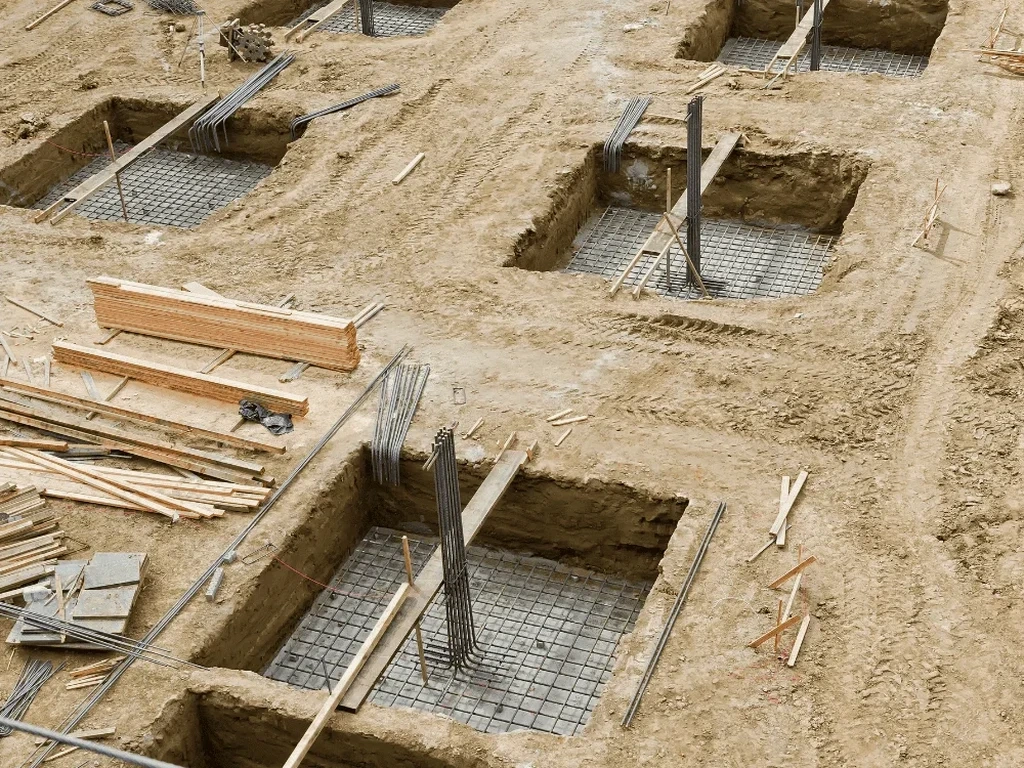
The real risk in Rockhampton is not the peak acceleration but the soft alluvium that can double the spectral acceleration at periods relevant to low‑rise structures.
Scope of work
- Peak ground acceleration (PGA) at the ground surface
- Shear modulus reduction and damping curves (Seed & Idriss)
- Post‑cyclic volumetric strain for settlement estimates
- Liquefaction potential index (LPI) for each soil layer
Area-specific notes
Rockhampton grew rapidly after the 1850s gold rushes, with early buildings placed directly on the shallow basalt or river terrace gravels without any seismic consideration. The 1918 Queensland earthquake (M 6.0, epicentre near Bundaberg) caused chimney collapses and cracked masonry in Rockhampton, yet no systematic geotechnical investigation followed. Today, many older structures in the CBD sit on pad footings that were never designed for lateral loads, and the underlying alluvium has variable density. Retrofitting those foundations requires a detailed understanding of the existing soil stiffness and the potential for differential movement under cyclic loading. That is where our seismic foundation design process starts: a thorough condition assessment before any strengthening scheme is proposed.
Standards used
AS/NZS 1170.4:2007 (Structural design actions – Earthquake actions), AS 1726:2017 (Geotechnical site investigations), AS 4678:2002 (Earth‑retaining structures), NCEER 1997 (Youd & Idriss – liquefaction evaluation)
Linked services
Site‑Specific Response Spectrum Analysis
We develop a response spectrum tailored to the actual soil column rather than using the generic AS 1170.4 spectrum. This involves downhole seismic testing (PS logging) to obtain P‑ and S‑wave velocity profiles, then performing equivalent‑linear and nonlinear site‑response analyses (DEEPSOIL or STRATA). The output includes acceleration time histories at the foundation level that structural engineers can use directly in dynamic models.
Liquefaction Hazard & Foundation Mitigation
Using SPT‑N values and CPT tip resistance, we compute the factor of safety against liquefaction for each layer down to 20 m. Where the safety factor falls below 1.1, we evaluate post‑liquefaction settlement and lateral spreading displacement. Mitigation options range from deep soil mixing to stone columns, and we carry out the design parameters for those systems so the contractor has clear construction specifications.
Typical parameters
FAQ
How does seismic foundation design in Rockhampton differ from Brisbane?
Rockhampton has a lower hazard factor (Z≈0.08) than Brisbane (Z≈0.10), but the local alluvium is thicker and softer near the Fitzroy River, which can produce stronger surface amplification. The design approach is the same under AS 1170.4, but the site‑class determination and liquefaction screening are more critical here because of the deeper soil profiles and higher water table.
What is the typical cost range for a seismic foundation study in Central Queensland?
For a standard commercial building site in Rockhampton, the study including field testing (SPT, CPT, downhole seismic) and analysis (site‑response spectra, liquefaction assessment) falls between AU$1,880 and AU$7,120. The final figure depends on the number of boreholes, depth of investigation, and whether advanced laboratory cyclic tests are required.
Do I need seismic foundation design for a single‑storey house in Rockhampton?
Most residential slabs in Rockhampton are designed to AS 2870 (footing design) and do not require a formal seismic analysis unless the soil is classified as Site Class E (very soft) or the house has an unusual structural system. However, if the property is on deep alluvium near the river or on reclaimed land, a basic seismic screening is advisable to avoid differential settlement during a moderate earthquake.